Give your Fireplace a Facelift with Thin Brick: A Brick Masons Insight to Upgrading Your Fireplace with Brick Veneer

The fireplace has always been a central feature of a home—a place to gather, relax, and feel cozy. But if your fireplace is outdated, bland, or doesn’t match your current style, it can bring down the entire room. Fortunately, one of the easiest and most effective ways to transform your fireplace without a full demolition is by using brick veneer. This affordable, stylish, and eco-friendly solution can completely upgrade your fireplace, giving it the look and feel of authentic masonry without the weight or expense.
In this comprehensive guide, we’ll explore what brick veneer is, why it’s a great option for fireplace makeovers, how to plan your upgrade, installation tips, style inspirations, and everything in between. Whether you’re a homeowner looking to refresh your living space or a contractor searching for budget-friendly fireplace renovation ideas, this post is your complete resource for upgrading a fireplace with brick veneer.
What Is Brick Veneer?
Brick veneer is a thin layer of real or manufactured brick used as a decorative surface rather than a structural element. Unlike full-thickness bricks, which are typically 3-4 inches thick and require a heavy-duty foundation, veneer bricks are usually around ¾ to 1 inch thick and can be adhered directly to a variety of surfaces.
Brick veneer comes in two main types:
Clay Brick Veneer – Made from real clay, fired like traditional bricks. Offers natural color variation and texture.
Manufactured Brick Veneer – Made from lightweight concrete or composite materials, designed to replicate real brick at a lower cost.
Both options are available in a range of colors, finishes, and styles to suit every design aesthetic—from rustic farmhouse to sleek industrial.
Why Upgrade Your Fireplace with Brick Veneer?
There are several compelling reasons to choose brick veneer for a fireplace upgrade:
1. Affordability
Full brick or stone fireplace renovations can be expensive due to the materials and structural work required. Brick veneer delivers the look of traditional masonry at less cost—especially when installed directly over an existing fireplace surround.
2. Lightweight and Versatile
Because it's thin and lightweight, brick veneer can be applied to drywall, cement board, or even existing tile or brick (with proper prep). This makes it ideal for remodeling projects without needing to alter the fireplace's structure.
3. Aesthetic Flexibility
Whether you want a warm red-brick hearth for your farmhouse living room or a sleek whitewashed look for a modern aesthetic, brick veneer offers endless design possibilities. You can even paint or limewash it for added personality.
4. Increased Home Value
A fireplace with a stunning brick façade can become a standout feature of your home, potentially increasing its resale value and appeal.
Planning Your Fireplace Upgrade
Before jumping into the installation process, you’ll need to make some key decisions and preparations.
Step 1: Evaluate Your Existing Fireplace
Take a close look at your current fireplace:
Is the surface flat and structurally sound?
Is it made of brick, drywall, concrete, or tile?
Is there a mantel or hearth that will need to be worked around?
Brick veneer can usually be installed over most surfaces with minimal prep, but loose materials or extensive damage may require repair first. If going over drywall we recommend installing cement board over the drwall first before installing the brick veneer, this will ensure you of proper bonding between the thin set mortar and wall.
Step 2: Choose Your Brick Veneer Style
Do you want a traditional, classic look or something modern and minimalist? Here are a few popular options:
Rustic Red Brick – A timeless look that brings warmth and nostalgia.
White Brick – Perfect for farmhouse or coastal themes.
Gray or Charcoal Brick – Adds a modern, industrial edge.
Distressed or Reclaimed Look – Adds texture and character with an aged feel.
Look at inspiration photos and samples to decide which style suits your space.
Step 3: Determine Quantity Needed
Measure the height and width of the area you want to cover. Add 5-7% extra to your total square footage to account for cuts and waste. More if larger project with lots of corners. Best to verify quantities with supplier by going over the areas you will be installing.
Step 4: Choose Top of the line quality Mortar with polymer Adhesive
You’ll typically need a very high quality polymer-modified mortar (thinset) (for tight-fit or dry-stack styles). Make sure it's rated for high temperatures if you’re covering areas close to the firebox.
Tools and Materials Checklist
Here’s what you’ll typically need to install brick veneer:
Brick veneer pieces or panels
Top quality rated polymer modified mortar
Grout bag (if applying mortar between bricks)
Trowel
Angle grinder when needed, wet cut table saw (for dust control cuts)
Level and chalk line
Transit Laser with reader
Painter’s tape and drop cloths
Wire brush and sponge for cleanup
Cement board (if the surface requires extra reinforcement)
Safety gear: gloves, eye protection, dust mask
Hepa dust control filter
Installation Guide: How to Apply Brick Veneer to a Fireplace
Installing brick veneer is a process that requires attention to detail, but with a step-by-step approach, it can be very rewarding.
Step 1: Prepare the Surface
Clean the surface thoroughly, removing any dust, grease, or loose materials.
If applying over painted drywall be sure you are adding a layer of 1/2" cement board for better adhesion.
Use painter’s tape to protect surrounding walls and flooring.
Mark a level chalk line along the bottom to guide your first row with your transit laser.
Step 2: Prepare top quality polymer modified mortar
Step 3: Apply the Brick Veneer
Use precison laser and levels to keep the brickwork straight and plumb on the face, be sure to keep the face of each brick clean as it will be near impossible to remove the P.M.M.
Step 4: Grouting Thin Brick
Once the bricks are set (typically after 48 hours), use a grout bag to fill joints with mortar.
Tool the joints with a jointer for a clean finish.
Wipe away excess with a damp sponge or brush once it begins to set.
Step 5: Finishing Touches
Clean the brick with a wire brush to remove residue.
Seal the surface if desired (especially for light-colored bricks).
Reinstall the mantel or trim as needed.
Style Ideas and Design Inspiration
Need help visualizing your new fireplace? Here are a few ideas for how to use brick veneer to match different design styles:
1. Modern Farmhouse
Use white or cream-colored brick with a chunky wood mantel. Add shiplap above the fireplace or rustic floating shelves.

2. Industrial Loft
Opt for dark gray or charcoal brick veneer, paired with black metal accents, exposed beams, and minimal décor.

3. Coastal Cottage
Use soft light red brick, light blue accents, and light wood furniture for an airy, beachy vibe.
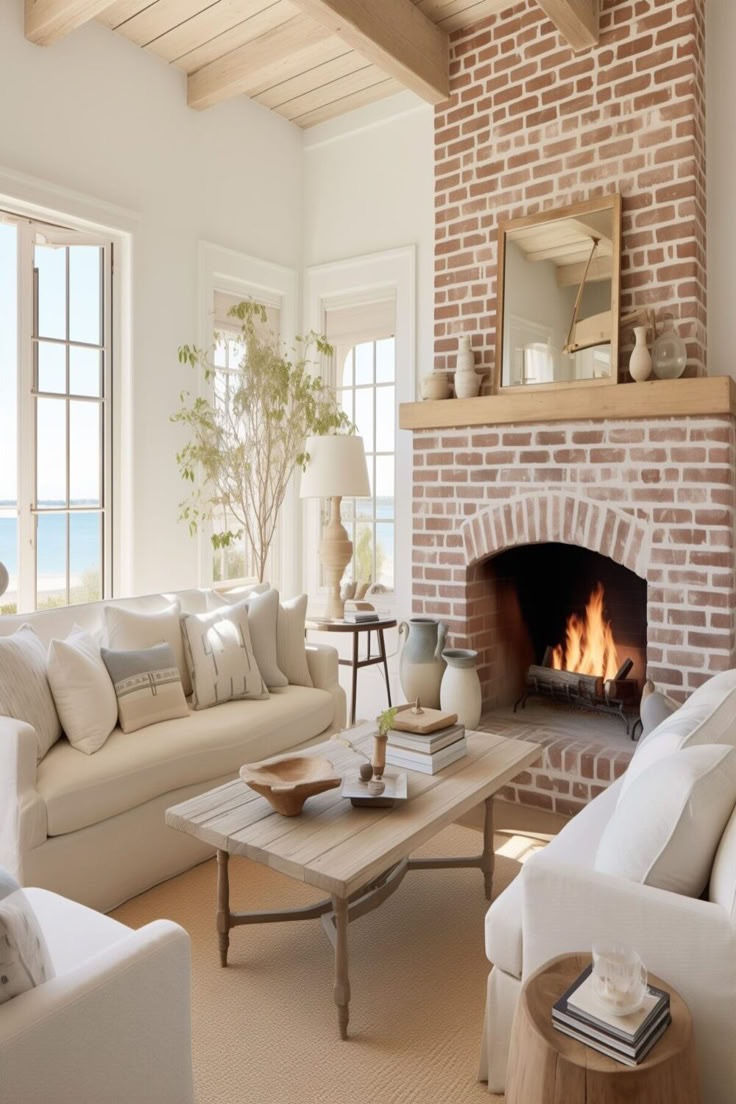
4. Traditional Colonial
Choose classic red brick with medium mortar joints and crown molding around the mantle for a timeless appearance.

5. Scandinavian Minimalism
Try white brick veneer with a linear gas insert, sleek mantel shelf, and minimal accessories.

Maintenance and Care
Once your new fireplace surround is complete, you’ll want to keep it looking its best:
Dust regularly with a soft brush or dry cloth.
Clean stains with a mild soap and water solution. Avoid harsh chemicals that could damage the mortar or surface.
Touch up mortar if cracking appears over time.
Consider sealing if you're in a high-humidity area or using a light-colored veneer near the firebox.
Pros and Cons of Brick Veneer Fireplace Upgrades
Here’s a quick breakdown of the benefits and potential drawbacks to consider:
Pros:
✅ Affordable✅ Lightweight and versatile✅✅ Wide range of design options✅ Boosts home value✅
Cons:
⚠️ Some surfaces may need prep or reinforcement⚠️ ⚠️ tricky to cut and align without the right tools
When to Hire a Professional
While many homeowners can tackle a brick veneer fireplace project on their own, there are situations where hiring a contractor may be worth the investment:
If your existing fireplace surface is unstable or damaged
If you're uncomfortable with masonry work or cutting materials
If your design includes complex corners or arches
If you're working with natural clay brick veneer and want a flawless finish
Professional masons or remodeling contractors can ensure the installation is up to code, safe, and visually perfect—especially if your fireplace is the focal point of your home.
Final Thoughts: A Worthwhile Upgrade
Upgrading your fireplace with brick veneer is one of the most cost-effective and visually impactful renovations you can do. It transforms a dated, drab fireplace into a stunning architectural feature that adds warmth, character, and value to your home.
Whether you’re going for rustic, modern, or something in between, there’s a brick veneer style that fits your vision. With proper planning, the right tools, and a bit of hands-on work, you can completely change the look and feel of your living room or den.
Need Help with Installation?
If you’re located in Southwest Florida and want a professional, high-quality brick veneer fireplace upgrade, Accent Masonry is here to help. With over 35 years of experience and a passion for detail, we specialize in stone and brick veneer installations for homeowners in Naples, Cape Coral, Fort Myers, and Punta Gorda.
Contact us today at (239)-464-0009 or email us at accentmasonryllc@yahoo.com for a free consultation.
Let us help you create a fireplace you’ll love coming home to.


Comments